
Completely Reconsidering Pretrial Release Procedures
Listen to the gospel of Alison Siegler

When I was trained long ago on how to handle a pretrial release hearing (what regular laypersons would call a bond hearing) I learned it the wrong way. It wasn’t my fault. Pretty much everyone was doing it wrong. The judges and magistrates were doing it wrong. It was botched by federal courts across the land.
What I mean by wrong is that the lawyers and judges were doing a mass misreading the federal criminal code and procedures about pretrial release. I can’t think of another instance like this of statutory false consciousness. As a result, thousands of federal criminal defendants did not get a fair and legal hearing about whether they would be released or detained while their case was pending. The procedure by which countless defendants were detained was not correct or proper.
And then about 5 or 10 years ago, there was a shift here in Oregon and across the national defender community about what the pretrial release laws actually say. What the codes definitely don’t say is that federal criminal defendants may normally be detained following a simple hearing at arraignment about whether they pose a risk of nonappearance for court or are a danger to the community. It’s much more procedurally complex. In many cases, a correct reading of the code triggers multiple hearings. There can be a hearing within a hearing. A procedural turducken. 🦆🦃🐓.
When the code is followed correctly, more nonviolent and deserving defendants are eligible for release pending trial.
Teamwork is always making the dream work in our business, but the recent awareness of the correct process can be traced back to the vision and dogged efforts of one person: Alison Siegler. She understood not only that there was a grave problem with a misinterpretation of the federal code on pretrial release but also the terrible, disparate impact that was having on people of color and non-US citizens. She inspires me.
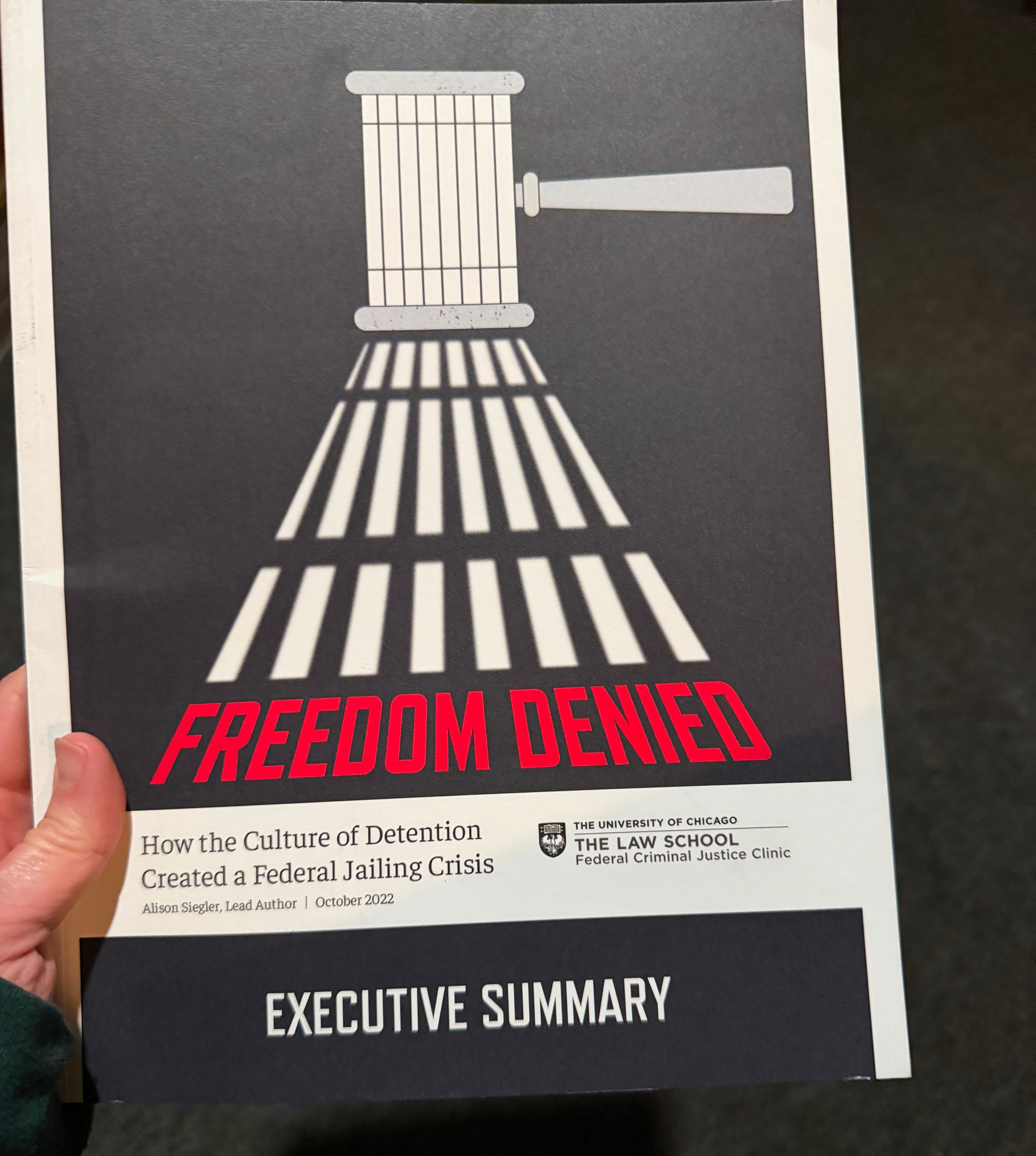
Here’s Alison’s easy to follow walk through of pretrial release procedures.

Don’t leave home without it (if your destination is a detention hearing or a meeting with your new detained client).
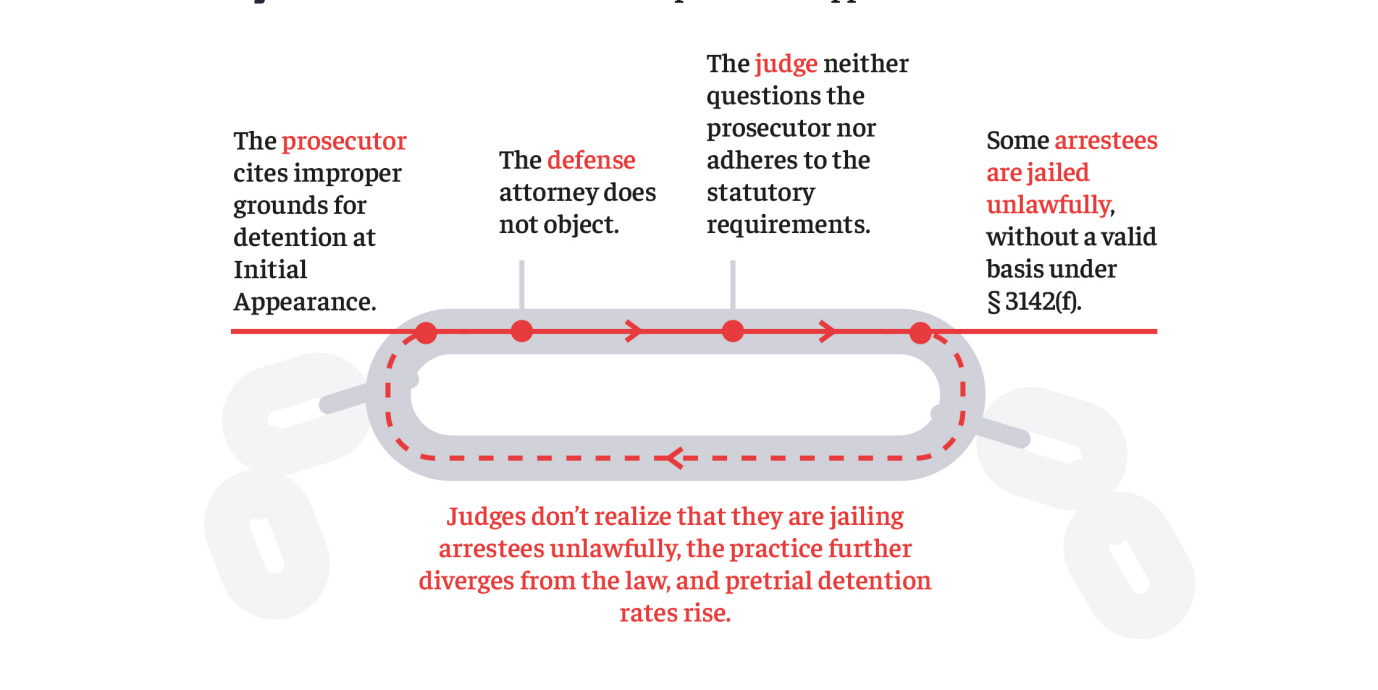
Here’s a sharp graphic from her team’s Freedom Denied report about the “problematic feedback loop” that undergirds excessive detentions in federal court:
If you are thinking “but CJA attorneys usually come in after their new client has been ordered detained and we don’t handle release hearings” instead think about examining whether the client’s pretrial detention is legit. There is a ripe opportunity here for CJA attorneys to go back and examine whether the Court got the law right. As a bonus, I’ve found that when I kick off the attorney-client relationship by fighting a well-grounded and righteous battle for immediate pretrial release, it sets a productive tone going forward.
Also, you may have heard that the the Federal Judicial Center (FJC) released the Seventh Edition of the Benchbook for U.S. District Courts. Thanks to Team Siegler, there’s a completely revised and corrected section in the benchbook that you can cite to as you guide the federal judges towards the bright light of truth and accuracy. 🌞